3 Key Takeaways from IAEA 2026
The gap between collecting data and actually changing what happens in class.
TL;DR
Lamppost attended the 51st annual International Association for Educational Assessment (IAEA) conference in Toronto, September 27 to October 2, 2026, as a keynote sponsor. Our three takeaways for Canadian educators:
- Trust in educational technology starts with data privacy and Canadian data residency.
- Assessment data only means something in context: the student, the classroom, the provincial and territorial curriculum.
- The missing piece isn't more data or more research. It's a school operating system that carries data the last mile, from collection to action, with a clear owner on every number.
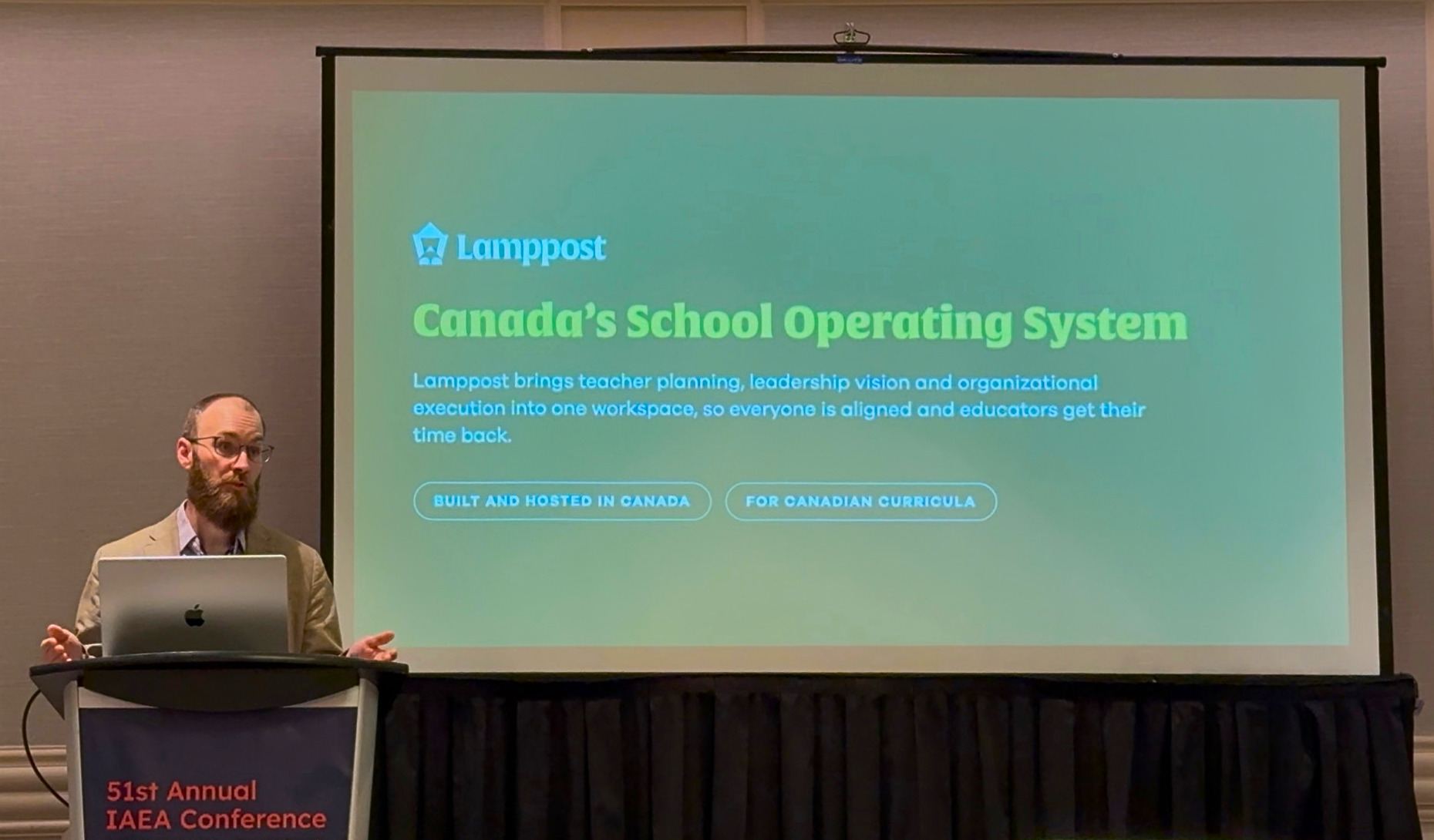
Last week, Lamppost joined assessment leaders from around the world in downtown Toronto for the 51st annual conference of the International Association for Educational Assessment (IAEA), hosted by the Education Quality and Accountability Office (EQAO) in partnership with Vretta at the Marriott Downtown. We were proud to be a keynote sponsor, and prouder still to have the global assessment community land in our own backyard. Our Founder and CEO, Joshua Linkletter, a former teacher and principal, took the stage to talk about what he calls the last mile: the gap between collecting data and changing what happens in a classroom in time to matter.
This year's theme was Trust, Transparency and Technology in Educational Assessment, and over five days it brought together assessment agencies and ministries from around the world, researchers, school and system leaders, and the education technology partners building the tools they rely on. Sessions ranged across culturally responsive assessment, transparency in scoring, educator and student voice, AI and machine learning in assessment, and privacy and security.
Here's what stuck with us, and why it matters for the educators we build for.
Why does data privacy matter so much in Canadian education technology?
Privacy and security had their own track this year, but the theme ran through nearly every room. As assessment moves further online and AI enters the picture, one question matters more than ever: can we trust where our students' information goes, and who is accountable for it?
For Canadian schools, that question has a very practical dimension. Much of the software in our classrooms was built elsewhere and stores data elsewhere. Educators are increasingly, and rightly, asking where student and staff information actually sits, who can access it, and whether a tool was designed with Canadian privacy expectations in mind or retrofitted to meet them.
How Lamppost helps: Lamppost was built in Canada for Canadian schools, and all data is stored on Canadian servers. Privacy wasn't a compliance checkbox added later; it was a design principle from day one.
Why is context everything in educational assessment?
The conference closed on Friday with Professor Mary Richardson's keynote, "Trusting Times? Understanding Assessment and the Aims of Education," and it was the right note to end on. Her argument was that learning is inherently messy, that we're still working out the long-term effects of the pandemic while generative AI reshapes everything from content creation to what a valid assessment even looks like, and that through all of it, learners need an environment they can trust and in which they feel they belong.
Her point that landed hardest for us: a number without its context is not information. The same result can mean entirely different things depending on the student, the classroom, the curriculum, and the moment in the year it was captured. Trust in assessment depends on understanding what the data is actually telling us, and on communicating that clearly, to the public and to learners themselves.
Every teacher already knows this. A Grade 6 class in a French Catholic board in Eastern Ontario does not look like a Grade 6 class in the Northwest Territories, and neither looks like the assumptions baked into most education software built for other systems. Context isn't a layer you add on top of the data. It's what makes the data mean anything at all.
How Lamppost helps: Lamppost is aligned to each provincial and territorial curriculum, so lesson planning, assessments and goals are built around the expectations your students are actually held to, not a generic approximation.
Why do educators need a unified operating system, not another tool?
The most striking thing about a conference like IAEA is how much we already know. Decades of research on assessment design, feedback and student growth were on display in every session. The gap is not in the evidence. The gap is in the daily reality of putting it to use.
Canadian teachers report spending more than ten hours a week on administrative work that has nothing to do with teaching. Lesson plans live in one place, assessment data in another, to-do lists in a third, and school goals in a document nobody has opened since September. When everything is fragmented, even the best research can't travel the last mile into the classroom.
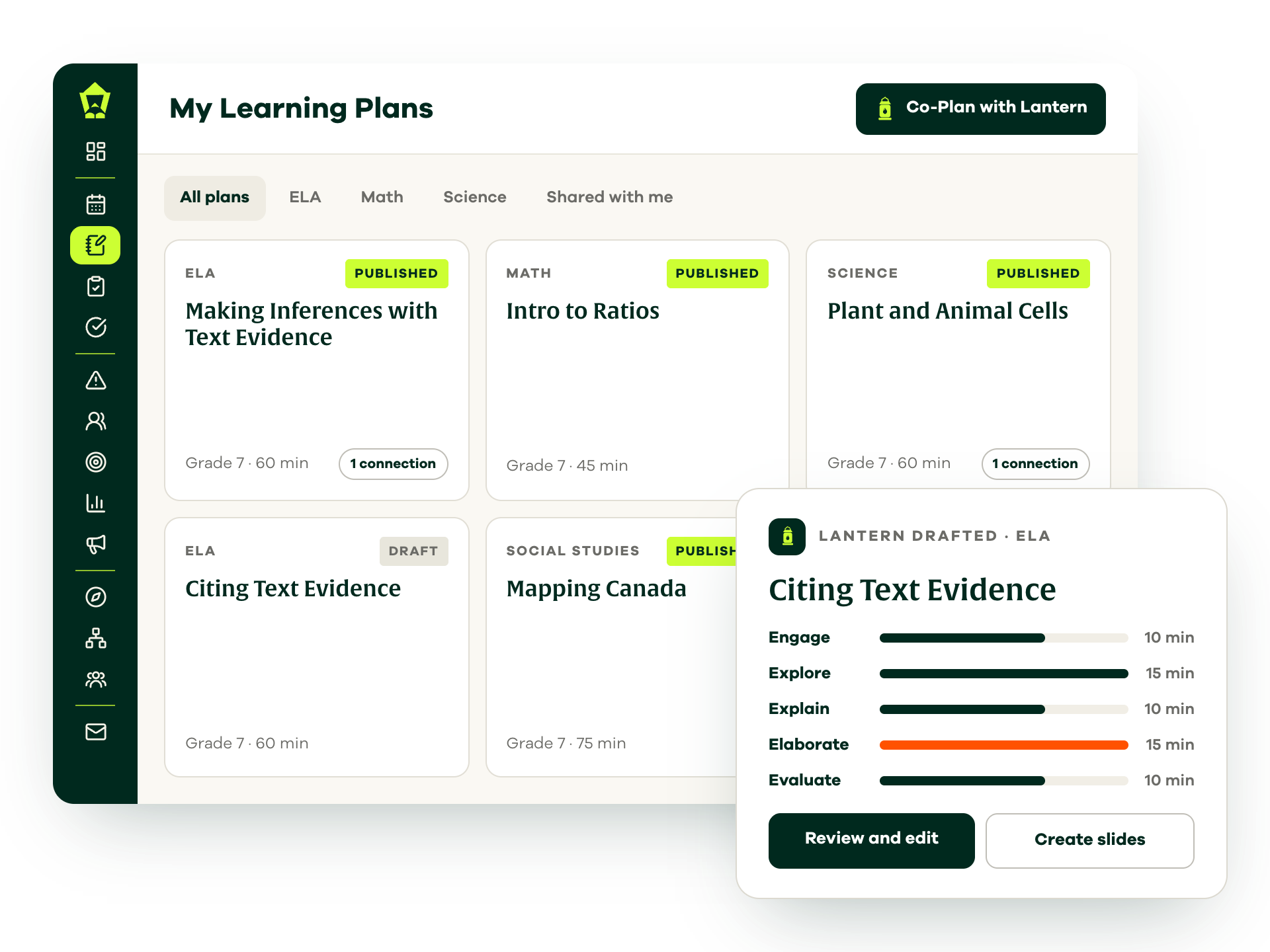
What educators need is not another tool but a unified one: a single school operating system that connects daily workflow to school vision, works alongside the board-mandated student information systems that already exist, and gives time back to the people doing the work. That's good for teachers, and it's good for students, because a teacher with ten hours back is a teacher with ten more hours for kids.
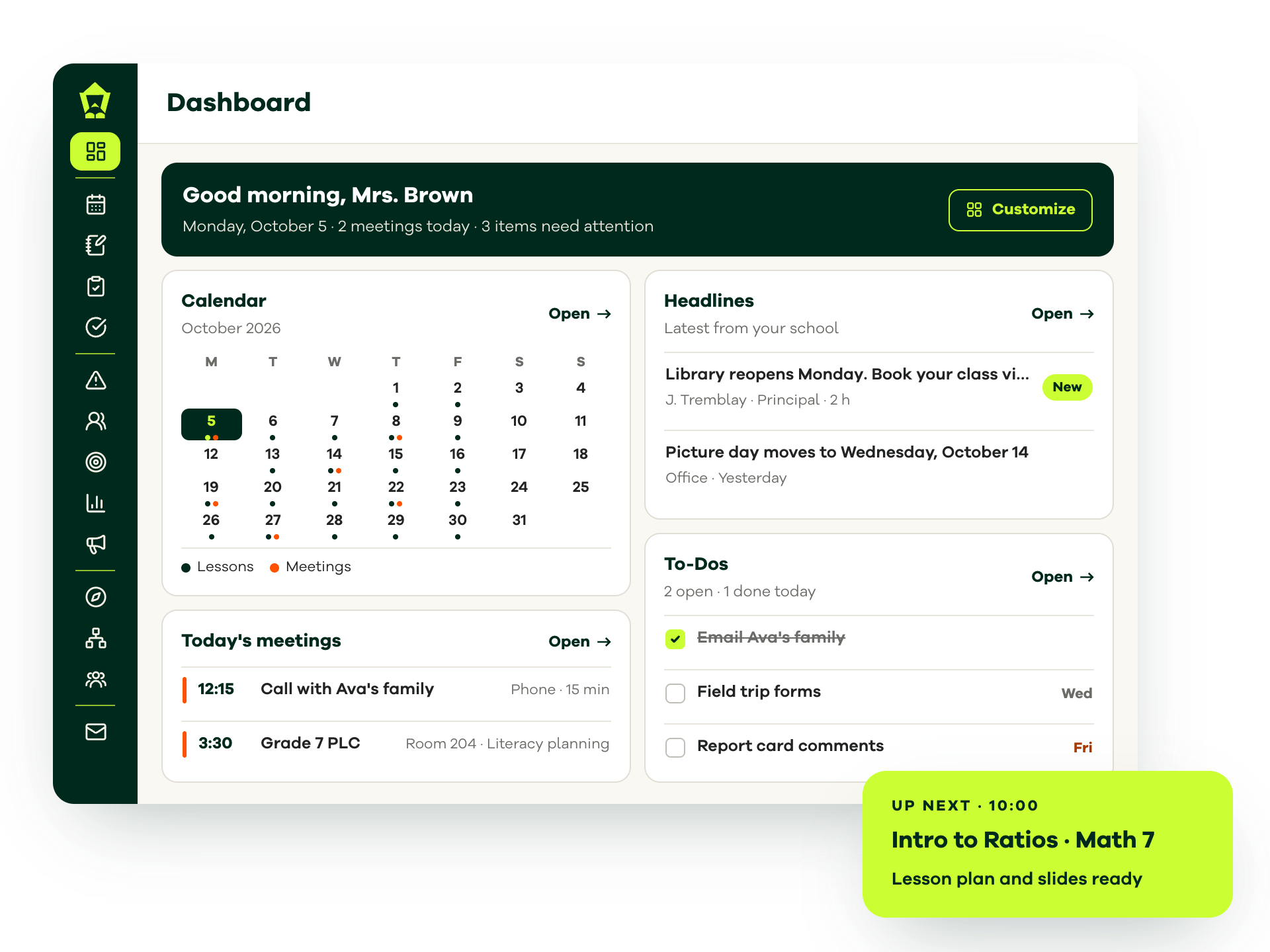
How Lamppost helps: Lamppost brings lesson planning, assessments, to-dos, structured meetings, issues tracking, goals and real-time school data into one platform, with role-specific views for teachers, principals and superintendents. It integrates with the systems your board already uses, including PowerSchool, rather than asking you to replace them.
What's next: the last mile between data and action
If there was a single thread running through the week, it was this: the future of assessment is not simply more student data. Schools already collect more than they can currently manage. The real work is acting on the right few numbers, every week, while there's still time to change course.
Not every number is the same. Trailing indicators, provincial results and year-end summatives, are rigorous and necessary, but they're a report on a race that already finished. By the time a Grade 6 result reaches a teacher, that student is in Grade 7. Leading indicators, screeners, diagnostics, attendance, formative checks, are the ones you can move this week, and they predict the ones you'll report next year.
Most schools already have those numbers. What's missing is choosing the few that matter most, putting a name beside each one, and looking at them every single week. A number with no owner, no priority behind it and no weekly rhythm is just a report.
That's what Lamppost is built for: one place where the school's vision, its priorities and its weekly scorecard sit side by side, every number has an owner, and the leadership meeting runs on it. Not more data. The system that carries the data the last mile.
Thank you, Toronto
Our thanks to EQAO, Vretta, the IAEA and every delegate who stopped by to talk with us. If you missed us at the conference and want to see how Lamppost works for your school, book a demo with us. We'd love to show you.
Onward and upward,
—The Lamppost Team
Frequently asked questions
What is the IAEA conference?
The International Association for Educational Assessment holds an annual conference for assessment agencies, researchers, policy-makers and education technology providers. The 51st edition took place in Toronto, Canada, from September 27 to October 2, 2026, hosted by EQAO with Vretta.
What was the theme of IAEA 2026?
Trust, Transparency and Technology in Educational Assessment.
What is Lamppost?
Lamppost is a Canadian School Operating System for teachers, principals and superintendents. It unifies lesson planning, assessments, to-dos, meetings, goals and school data in one place, is aligned to provincial and territorial curricula and stores all data on Canadian servers.
Does Lamppost replace PowerSchool or other student information systems?
No. Lamppost can integrate with the systems your board already mandates and works as the day-to-day operating layer on top of them.